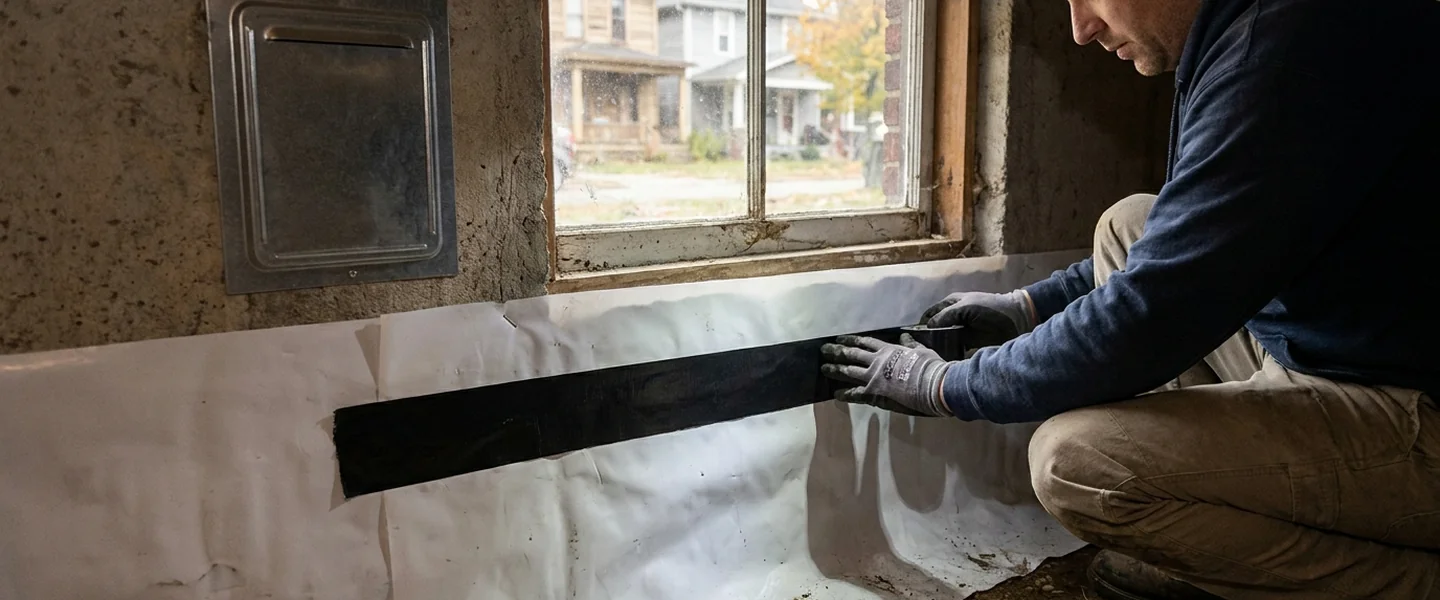
How Much Does Crawl Space Repair Cost in Columbus, OH? (What Actually Drives the Price)
A central Ohio crawl space specialist’s guide.
- Licensed & Insured in Ohio
- Locally Owned, Columbus-Based
- 25-Year Warranty on Encapsulation
- Free On-Site Estimates
- 0% Financing Available
Pricing in the crawl space repair industry is one of the most frustrating things a Columbus homeowner has to navigate. National franchises quote one number, local contractors quote another, and the variance between two written quotes for the exact same Franklin County crawl space can easily be five figures. Why? Because crawl space repair is not a commodity — the scope changes dramatically based on the actual condition of your specific home, and any honest contractor has to physically see the space before writing a real number on paper. This guide explains what drives the cost in central Ohio and what to look for when you compare quotes, without quoting a number we couldn’t honor without inspecting your home first.
The Six Factors That Actually Determine Crawl Space Repair Cost in Columbus
1. Square footage. The single biggest cost driver. A 1,200 sq ft Hilliard ranch crawl space takes about half the materials of a 2,400 sq ft Upper Arlington colonial crawl space. Vapor barrier coverage, dehumidifier sizing, insulation linear footage, and labor hours all scale with square footage. Honest quotes in the Columbus metro will show the exact measured square footage the technician took during the inspection.
2. Existing crawl space condition. Two homes with identical square footage can have wildly different scopes. One has clean soil, intact framing, and just needs a 20-mil vapor barrier plus a sized commercial dehumidifier. The other has standing water from a Big Walnut Creek storm event, visible mold on the joists, sagging fiberglass falling out of the bays, asbestos pipe wrap on the cast-iron drain stack, and degraded original 6-mil sheeting that has to be hauled out before any new work can start. The second scope easily doubles the first.
3. Drainage and water-entry issues. If your central Ohio crawl space has visible water entry — bulk water during spring snowmelt, persistent puddles after a heavy rain event, staining on the foundation walls — that has to be addressed before encapsulation can be installed. Perimeter French drains, sump pumps with battery backups, exterior grading work, or downspout extensions add scope and cost. This is especially common in Gahanna along Big Walnut Creek tributaries and in low-lying pockets of Westerville and Reynoldsburg where storm water collects. Skipping this drainage step is the single most common installer mistake we see during second-opinion visits across Franklin County.
4. Access and clearance. Tight crawl spaces (18-22 inch clearance, common in 1920s-1940s housing in Worthington Old Town, Upper Arlington pre-war Tudors, and Westerville Uptown bungalows) require specialized low-profile equipment and slower work. Multi-section crawl spaces with internal foundation walls need separate detailing per section. Crawl spaces with access only through a bedroom-closet hatch instead of an exterior at-grade door slow material handling considerably. All of this changes labor hours and therefore the quote.
5. Materials specified. A 6-mil black polyethylene vapor barrier costs a fraction of a 20-mil reinforced Stego Wrap installation. A portable 50-pint residential dehumidifier costs a fraction of a commercial Aprilaire 1820 or Santa Fe Compact70 unit sized properly for your cubic footage. The cheaper materials fail within 2-5 years in central Ohio’s climate; the better materials carry 25-year manufacturer warranties. The quote should specify the exact brand, model, and thickness so you can compare apples to apples.
6. Warranty terms. A 1-year non-transferable workmanship warranty has a fraction of the value of a 10-year transferable workmanship warranty. The written quote should spell out the warranty length, the transferability terms, and the explicit exclusions in plain English. If it doesn’t, ask.
What a Quality Quote Looks Like in Central Ohio
A good written estimate for Columbus-area crawl space work is itemized and specific. It should include: measured square footage, vapor barrier brand and model and thickness, linear feet of wall coverage and the method used to detail the walls, the vent sealing approach, the dehumidifier brand and model and capacity, the electrical work (dedicated circuit specification), the drainage work if applicable, demo and disposal of existing materials, the day-by-day timeline, the payment terms, the warranty terms in plain English, and the technician’s name. A quote with one line item and no breakdown is hiding something — usually a scope shortcut or a price padding that won’t survive comparison shopping against a real specialist’s quote.
Questions to Ask the Contractor
- What thickness vapor barrier do you install, and is it reinforced?
- What dehumidifier brand and model do you install, and how did you size it for my cubic footage?
- Is the workmanship warranty transferable to a new homeowner, and is there a transfer fee?
- Does the same technician who inspected do the install, or do you use a separate sales-and-crew model?
- What happens if I find a problem six months after the install?
- Can you provide three local references from work completed in the past 12 months?
What Not to Do
Don’t accept a phone quote — the number will be wrong. Don’t sign anything on inspection day under “today only” pressure. Don’t pay more than 25-33% upfront. Don’t accept a written quote that doesn’t specify materials by brand and model. Don’t take the cheapest quote without comparing what each scope actually includes — saving on day one almost always costs more by year three when the cheap materials fail and you pay for the fix plus the original install all over again. And don’t ignore drainage problems — encapsulating over an active water entry is a recipe for a failed install and a frustrating warranty dispute later.
Columbus-Specific Cost Considerations
Central Ohio has factors that affect cost in ways national-franchise pricing models don’t capture. The glacial till subsoil has high clay content that holds water year-round, which means the dehumidifier needs to be sized larger than a national average would suggest for the same crawl space square footage. The freeze-thaw cycles of January and February mean the install plan needs to account for thermal performance, not just moisture — so insulation scope is more important here than it would be in a year-round warm climate. The mix of older raised-pier homes (Worthington, Upper Arlington, Westerville Uptown) and newer subdivision crawl spaces (Dublin, Hilliard, Gahanna) means scope varies dramatically across the metro — a quote that doesn’t reflect your specific housing stock is suspect. Homes in Gahanna along Big Walnut Creek often need drainage scope that homes on higher-elevation lots in Upper Arlington or Dublin don’t.
Common Misconceptions About Crawl Space Repair Cost
“The cheapest quote is the best quote.”
Usually wrong. The cheapest written quote in the Columbus metro is almost always missing scope — typically the drainage work, the proper dehumidifier sizing, or the vapor barrier upgrade from 6-mil to 20-mil reinforced. The hidden cost shows up in years 2-5 when the cheap materials fail and you pay for the fix plus the original install all over again, sometimes with mold remediation thrown in.
“The most expensive quote must be the best.”
Also usually wrong. The most expensive quote in this central Ohio market is almost always a national franchise selling you a “platinum tier” package with 30-50% margin overhead and a non-transferable warranty. The same materials installed by a local specialist run substantially less and come with a transferable warranty.
“I can do this myself with a vapor barrier kit from a big-box store.”
You can lay down a 6-mil sheet, yes. You will not seal the seams properly, you will not size or commission a dehumidifier correctly, you will not detail the wall coverage to maintain a termite-inspection gap, and you will not have warranty coverage when (not if) it fails. The DIY path saves money on day one and costs more by year three in nine out of ten cases we’ve seen.
“All crawl space contractors are basically the same.”
Strongly disagree. The sales-first national-franchise model and the technician-first local-specialist model produce wildly different outcomes for the same scope. Ask about the model before you ask about the price.
Bottom Line
The right price for crawl space repair in Columbus is the one that comes from an on-site inspection by a technician who will also do the install, that specifies materials by brand and model on a written quote, that includes a transferable workmanship warranty, and that addresses any drainage or structural issues before encapsulation rather than after. Call (614) 907-4875 to schedule a free 30-minute on-site inspection and receive a written, itemized quote within 24 hours.
Need a free inspection or a second-opinion quote review? Call (614) 907-4875. We serve Columbus and all surrounding Franklin County suburbs including Dublin, Westerville, Worthington, Hilliard, Upper Arlington, Grove City, Reynoldsburg, and Gahanna. Written estimates within 24 hours.
Related reading: Crawlspace Encapsulation Service Page | Crawlspace Mold Remediation Service Page | Dehumidifier Installation Service Page
Free Crawlspace Inspection in Columbus
Same-week appointments. No high-pressure sales. Serving Columbus and surrounding Franklin County suburbs including Dublin, Westerville, Worthington, Hilliard, Upper Arlington, Grove City, Reynoldsburg, Gahanna.